Best Time to Visit Varanasi
Planning a trip to Varanasi? Here's exactly when to go — ideal weather months, festival dates like Dev Deepawali, and what to avoid during peak summer and monsoon season.
Varanasi is a city best experienced without the weight of extreme heat, heavy rain, or thick winter fog working against you. Timing your visit right can be the difference between a magical sunrise boat ride on the Ganges and a trip spent indoors avoiding 45°C heat. Here's a season-by-season breakdown to help you plan.
Best Overall Time: October to March
The winter months from October to March are widely considered the best time to visit Varanasi. Days are pleasant and sunny, mornings are cool enough for a comfortable ghat walk, and evenings are ideal for watching the Ganga Aarti without battling humidity or heat exhaustion.
- Daytime temperatures: 15°C to 25°C
- Nighttime temperatures: Can drop to 5-8°C in late December and January
- Best for: Sunrise boat rides, walking tours, Ganga Aarti, temple visits, photography
Pack layers — mornings and nights get genuinely cold in December and January, especially near the river.
Peak Festival Season: October to November
If you want Varanasi at its most spectacular, plan around Dev Deepawali, the "Diwali of the Gods." In 2026, it falls on 24 November, when all 84 ghats are lined with over a million earthen lamps at dusk. It's one of the most photographed nights of the year in India, so book boats and accommodation well in advance — this is peak tourist season.
Dev Deepawali happens 15 days after Diwali, on the full moon night of Kartik Purnima. Expect large crowds, premium boat prices, and a genuinely unforgettable spectacle.
Coldest & Clearest: December to January
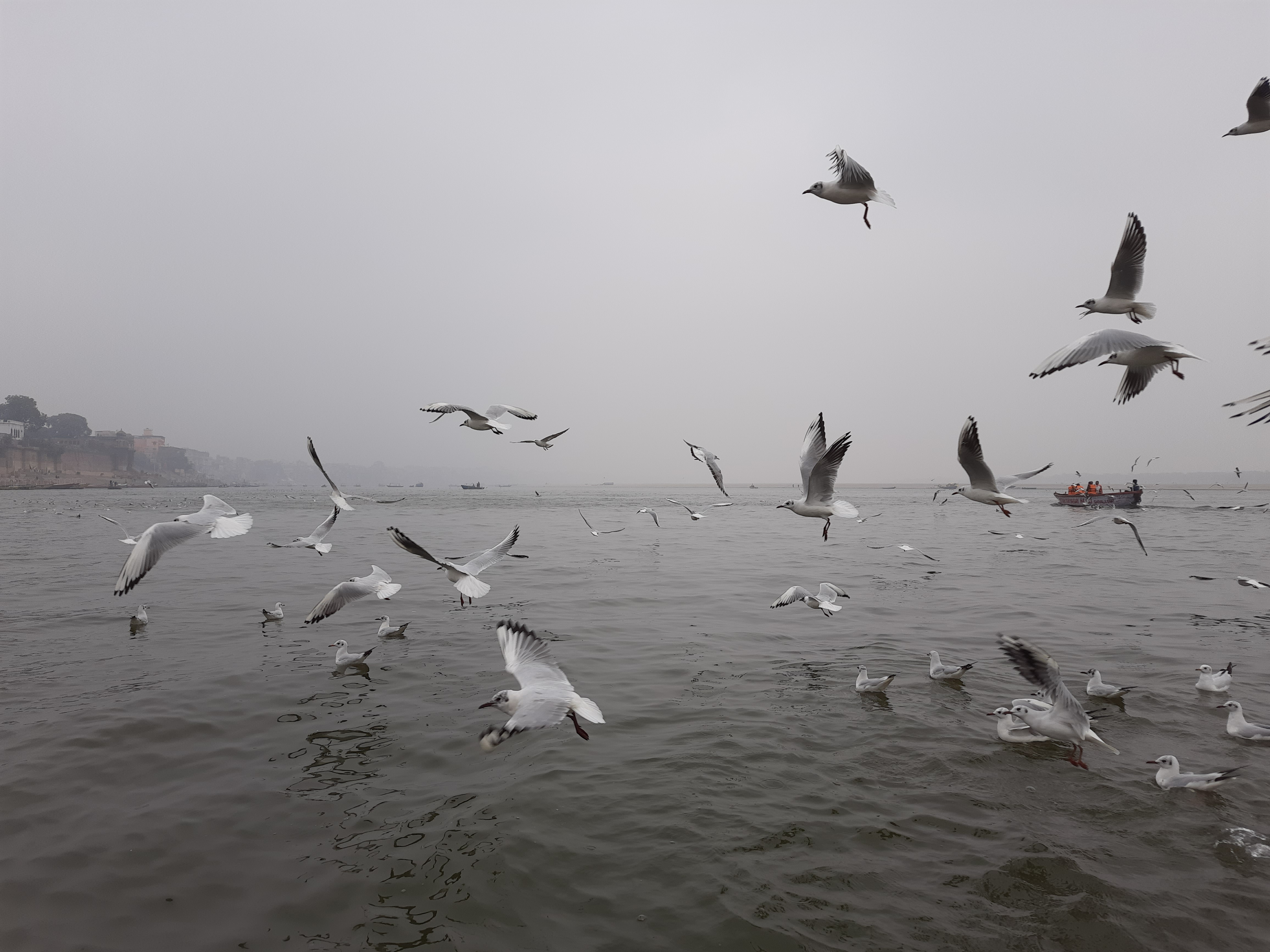
This is peak winter — the coldest stretch of the year, but also the clearest. Skies are crisp, sunrises over the Ganges are sharp and golden, and this is when Varanasi photographs best. It's a favorite window for photographers and anyone wanting the classic "misty ghat sunrise" shot.
This is also when Varanasi gets a seasonal visitor of its own — thousands of Siberian gulls fly in from the frozen rivers of Central Asia, gliding over the Ganges from November through March. Boatmen sell small packets of snacks so you can feed them mid-river, and watching them swarm around your boat at sunrise is one of those small, unexpected joys nobody mentions until they've seen it.
- Daytime temperatures: 12°C to 22°C
- Early morning temperatures: Can drop to 5-8°C, sometimes lower in late December
- Best for: Sunrise boat rides, photography, layered sightseeing without heat fatigue
Pack a proper jacket for early mornings — the river adds a real chill before sunrise, even though afternoons warm up comfortably.
Shoulder Season: February to March
Late winter into early spring offers a good middle ground — mild weather without the November-December crowd surge. Maha Shivaratri, one of the biggest festivals at Kashi Vishwanath Temple, falls on 6 March 2027, drawing large numbers of devotees for all-night prayers and rituals. If you want spiritual intensity without Dev Deepawali-level crowds, this window works well.
Avoid: April to June (Peak Summer)
Summer in Varanasi is harsh. Temperatures regularly cross 40°C, with May and June often pushing past 45°C. Humidity builds ahead of the monsoon, and midday outdoor sightseeing becomes genuinely unsafe for extended periods.
- Daytime temperatures: 35°C to 46°C
- Best for: Nothing — avoid unless necessary
- If you must visit: Stick to early morning (5-8 AM) and evening (after 6 PM) activities only
Monsoon Season: July to September
The monsoon brings relief from the heat but introduces a different challenge: the Ganges rises significantly, sometimes flooding the lower ghat steps entirely. Boat rides can be limited or suspended during heavy rain, and narrow lanes in the old city can flood.
- Daytime temperatures: 27°C to 35°C
- Rainfall: Heavy, especially in July and August
- Best for: Budget travelers who don't mind rain and fewer crowds; lush green surroundings if you're combining with a village tour
Quick Month-by-Month Snapshot
- October-November: Excellent — festivals, comfortable weather
- December-January: Very good — coldest but clear skies, best for photography
- February-March: Good — mild, Maha Shivaratri
- April-June: Avoid — extreme heat
- July-September: Fair — monsoon, budget-friendly, fewer tourists
Our Recommendation
For most travelers, late October through February offers the best balance of weather, festival timing, and manageable crowds. If Dev Deepawali (24 November 2026) or Maha Shivaratri (6 March 2027) align with your travel dates, plan around them — just book early, since accommodation and boats fill up fast for both events.